.png)
China Gaming Trends 2026: What Western Developers Need to Know
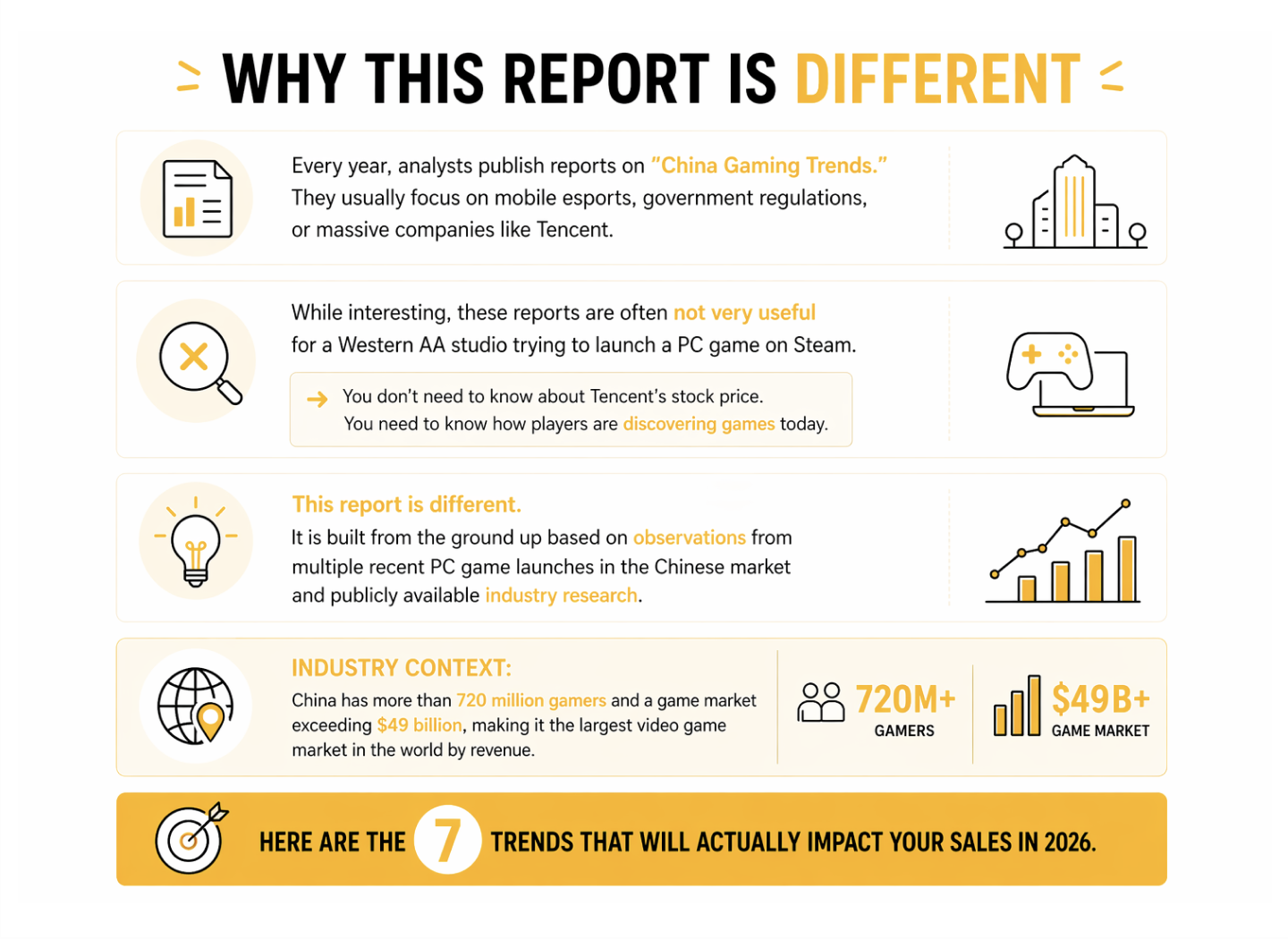
Every year, analysts publish reports on "China Gaming Trends." They usually focus on mobile esports, government regulations, or massive companies like Tencent.While interesting, these reports are often not very useful for a Western AA studio trying to launch a PC game on Steam. You don't need to know about Tencent's stock price. You need to know how players are discovering games today.
This report is different. It is built from the ground up based on observations from multiple recent PC game launches in the Chinese market and publicly available industry research.Industry context: China has more than 720 million gamers and a game market exceeding $49 billion, making it the largest video game market in the world by revenue.
Here are the 7 trends that will actually impact your sales in 2026.
Trend 1: The Short-Video Discovery Loop
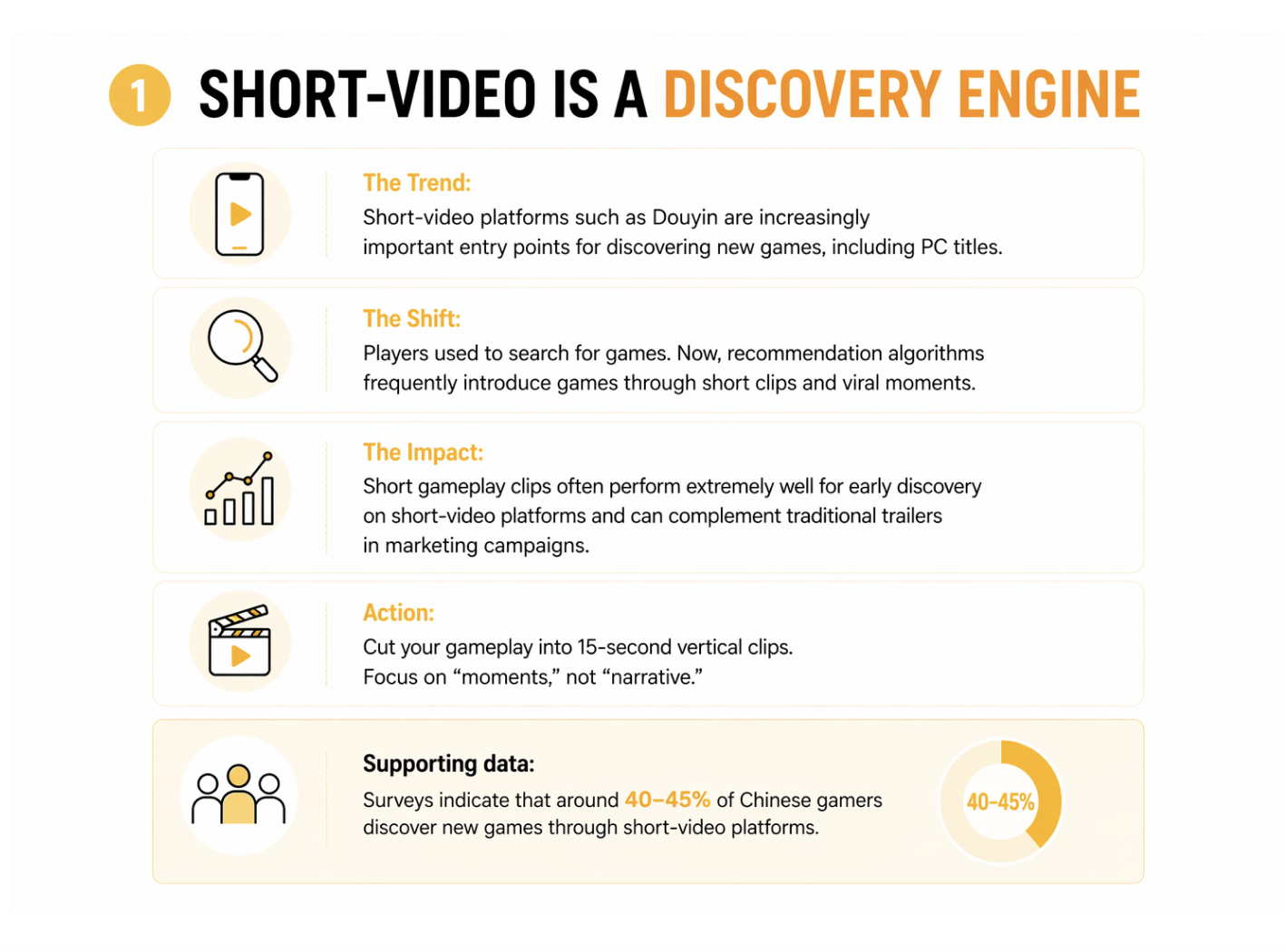
The Trend: Short-video platforms such as Douyin are increasingly important entry points for discovering new games, including PC titles.
The Shift: Players used to search for games. Now, recommendation algorithms frequently introduce games through short clips and viral moments.
The Impact: Short gameplay clips often perform extremely well for early discovery on short-video platforms and can complement traditional trailers in marketing campaigns.
Action: Cut your gameplay into 15-second vertical clips. Focus on "moments," not "narrative.
Supporting data: Surveys indicate that around 40–45% of Chinese gamers discover new games through short-video platforms.
Trend 2: Strategy & Simulation Renaissance
The Trend: While shooters and MOBAs dominate esports, the growth in premium PC sales is increasingly supported by simulation, strategy, and management games.
The Data: Titles like Manor Lords, Frostpunk 2, and Factorio expansions see strong interest among Chinese PC players.
The Why: Chinese gaming culture often values mastery, optimization, and high replayability, which aligns well with systems-driven gameplay.
Action: If you are building a sim or strategy game, localize early. These genres often attract significant engagement from Chinese PC audiences.

Trend 3: The Rise of Cozy Games on Xiaohongshu (Rednote)
The Trend: Xiaohongshu (Little Red Book) has emerged as an influential platform for marketing "cozy," "wholesome," and aesthetic-driven indie games.
The Shift: Originally focused on lifestyle and consumer content, the platform now hosts a growing gaming community and has a user base that skews toward lifestyle-oriented and female audiences.
The Impact: Games like Unpacking, Dorfromantik, and Stardew Valley often generate strong organic discussion on the platform.
Action: If your game is visually beautiful or relaxing, consider a Xiaohongshu strategy. It can be a highly targeted channel for this niche.

Trend 4: Localization Quality Can Strongly Affect Early Reviews
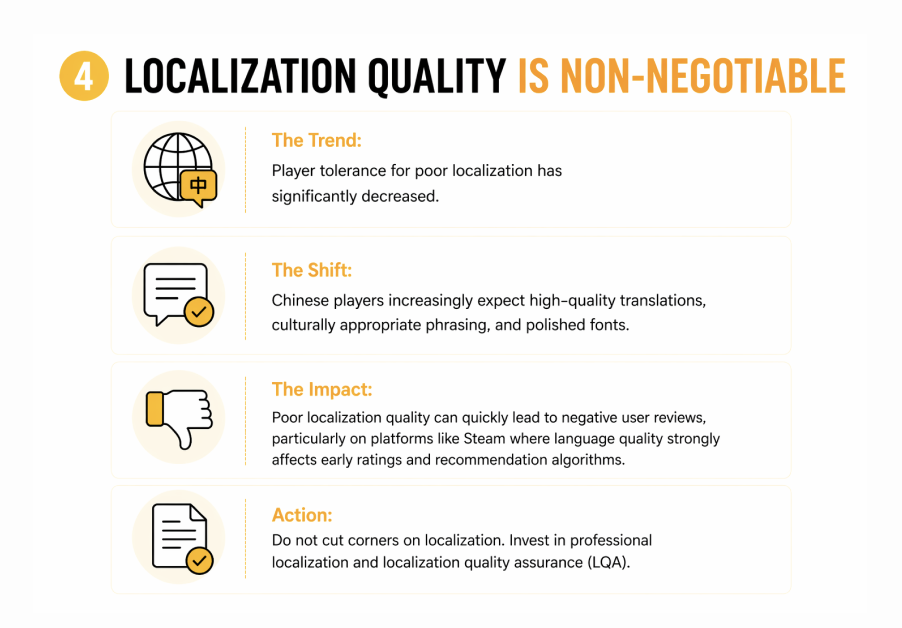
The Trend: Player tolerance for poor localization has significantly decreased.
The Shift: Chinese players increasingly expect high-quality translations, culturally appropriate phrasing, and polished fonts.The
Impact: Poor localization quality can quickly lead to negative user reviews, particularly on platforms like Steam where language quality strongly affects early ratings and recommendation algorithms.
Action: Do not cut corners on localization. Invest in professional localization and localization quality assurance (LQA).
Trend 5: Private Community Channels
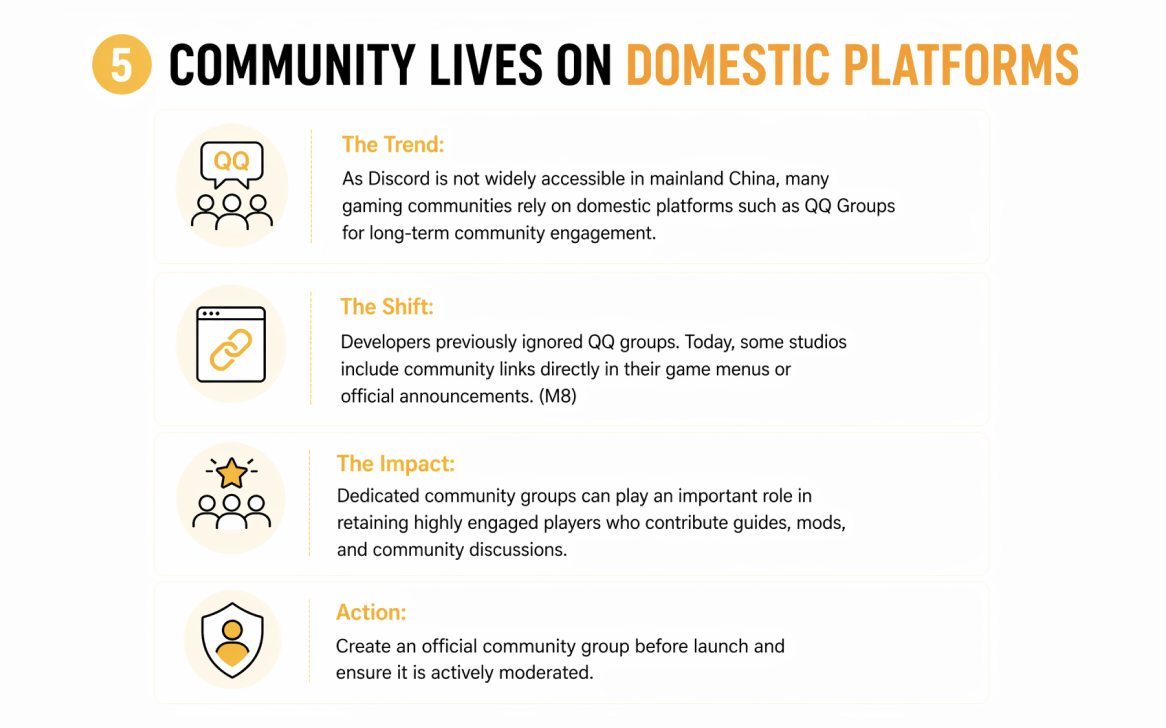
The Trend: As Discord is not widely accessible in mainland China, many gaming communities rely on domestic platforms such as QQ Groups for long-term community engagement.
The Shift: Developers previously ignored QQ groups. Today, some studios include community links directly in their game menus or official announcements.
The Impact: Dedicated community groups can play an important role in retaining highly engaged players who contribute guides, mods, and community discussions.
Action: Create an official community group before launch and ensure it is actively moderated.
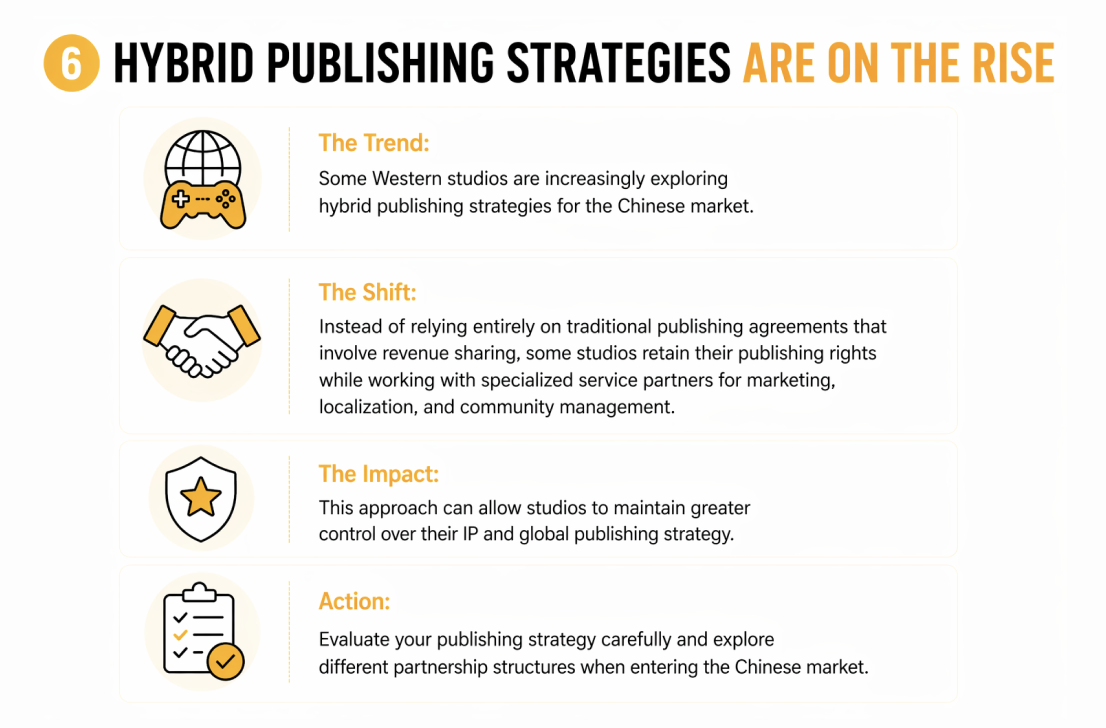
Trend 6: The Hybrid Publishing Model
The Trend: Some Western studios are increasingly exploring hybrid publishing strategies for the Chinese market.
The Shift: Instead of relying entirely on traditional publishing agreements that involve revenue sharing, some studios retain their publishing rights while working with specialized service partners for marketing, localization, and community management.
The Impact: This approach can allow studios to maintain greater control over their IP and global publishing strategy.
Action: Evaluate your publishing strategy carefully and explore different partnership structures when entering the Chinese market.
Summary: The 2026 Playbook
The market has matured. It is less about "being in China" and more about "operating effectively within the Chinese ecosystem."
Discovery: Douyin and short-video platformsEvaluation: Bilibili and community platforms such as Heybox
Community: QQ Groups and other domestic social platforms
(D3) Sales Context: Many international PC games reach Chinese players through Steam’s global platform, while the domestic Steam China platform contains only licensed titles approved for local distribution.
Sales: Steam (Global version)
This ecosystem is robust, profitable, and accessible to international studios that invest in localization, community engagement, and China-specific marketing strategies.
Studios that treat China as "just another language option" often struggle. Studios that build a dedicated China-focused go-to-market plan are more likely to capture long-term growth.
Other insights
.png)
ChinaJoy 2026: What Western Game Studios Should Expect from China’s Gaming Market

.png)
China Game Market Entry: A Practical Guide for Global Developers
China Gaming Trends 2026: What Western Developers Need to Know

Strategy tailored to your game
Data-driven approach. Personalized roadmap.